BRISTOL H24A383DBEA Reciprocating Compressor 460V 3-PHASE 39000BTU 3.5TON R22
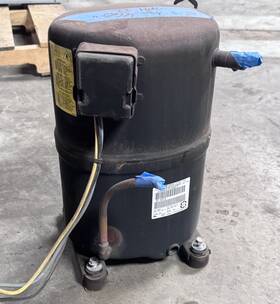
( Brand: Bristol ), ( Manufacturer Part Number: H24A383DBEA ), ( Part Type: Reciprocating Compressor ), ( Compressor Type: Reciprocating ), ( Refrigerant: R-22 ), ( Voltage: 460 V ), ( Power Phase: 3 Phase )
Review BRISTOL Reciprocating Compressor 460v 3-phase 39000btu 3.5ton R22
The **Bristol H24A383DBeA Reciprocating Compressor** is a high-performance, industrial-grade unit designed to deliver reliable cooling efficiency for commercial and light industrial applications. Engineered with precision, this **460V, 3-phase** reciprocating compressor operates seamlessly within demanding environments, offering robust performance for HVAC systems requiring **39,000 BTU/hr** of cooling capacity, equivalent to a **3.5-ton** refrigeration load. Built with durability in mind, this compressor features a robust **R-22 refrigerant** compatibility, ensuring compatibility with existing systems while maintaining optimal thermal transfer. Its **reciprocating piston design** provides consistent and efficient compression, minimizing energy waste while maximizing cooling output. The unit is constructed from high-quality materials, including reinforced cylinder blocks and precision-machined components, to withstand prolonged operation under heavy loads. Ideal for applications such as commercial refrigeration, process cooling, and industrial air conditioning, this compressor integrates smoothly with standard HVAC setups, offering a balance of performance and longevity. With its **sealed motor design**, it reduces maintenance requirements while enhancing operational reliability, making it a dependable choice for facilities requiring consistent cooling performance. Whether deployed in food service, manufacturing, or commercial buildings, the Bristol H24A383DBeA ensures dependable refrigeration with minimal downtime, reinforcing its reputation as a workhorse in industrial cooling solutions.
### **Pros and Cons of buying a Bristol H24A383DBEA Reciprocating Compressor (460V, 3-Phase, 39,000 BTU, 3.5 Ton, R-22)**
#### **Pros**
1. **High Efficiency for Commercial Use**
The 39,000 BTU capacity makes it suitable for medium to large commercial spaces such as restaurants, small retail stores, or light industrial environments. Its reciprocating design provides reliable cooling performance for moderate load applications.
2. **3-Phase, 460V Power Compatibility**
This compressor is designed for industrial-grade electrical systems, making it a better fit for facilities with robust power infrastructure. It avoids the limitations of single-phase systems, which may struggle with high-capacity cooling demands.
3. **Proven Reciprocating Technology**
Reciprocating compressors are known for their durability and efficiency in moderate-temperature applications. They are less prone to oil degradation compared to scroll or screw compressors, which can be an advantage in R-22 systems where oil management is critical.
4. **Compatibility with R-22 Refrigerant**
While R-22 is being phased out due to its ozone-depleting properties, this compressor is still functional for existing systems. If you have an existing R-22-based HVAC setup, this unit can be a cost-effective replacement part without requiring a full system retrofit.
5. **Modular and Replaceable Design**
The reciprocating design allows for easier servicing and part replacement compared to some other compressor types. Individual components, such as valves and pistons, can often be repaired or swapped out, reducing long-term maintenance costs.
6. **Widely Available Parts and Support**
As a well-established brand, Bristol compressors benefit from extensive aftermarket support. Spare parts, technical manuals, and service resources are readily available, which can be crucial for minimizing downtime in commercial settings.
---
#### **Cons**
1. **R-22 Phase-Out and Environmental Regulations**
The most significant drawback is the use of R-22 refrigerant, which is banned in new installations in many countries due to its ozone-depleting potential. If you are installing this compressor in a new system, compliance with modern environmental laws may require switching to an alternative refrigerant (e.g., R-410A, R-404A, or R-134a), which could involve additional costs for system modifications.
2. **Higher Operating Costs with R-22**
R-22 is more expensive than newer refrigerants, and its efficiency is generally lower compared to modern alternatives. Over time, this can lead to higher energy bills and maintenance expenses, especially if the system is not optimized for the refrigerant.
3. **Potential for Higher Maintenance**
Reciprocating compressors can be more prone to wear on moving parts (e.g., pistons, valves, and seals) compared to screw or scroll compressors. This may result in more frequent servicing, especially in dusty or dirty environments where contamination can accelerate wear.
4. **Limited Longevity Compared to Modern Alternatives**
While reciprocating compressors are durable, newer compressor technologies (e.g., scroll or variable-speed compressors) often offer better energy efficiency and longer lifespans. If energy costs are a concern, investing in a more modern unit may be more cost-effective in the long run.
5. **Noise and Vibration Considerations**
Reciprocating compressors can generate more noise and vibration than smoother-running alternatives like screw or scroll compressors. This may be a consideration for installations in noise-sensitive areas or where quiet operation is a priority.
6. **Potential for Higher Initial Cost**
While the compressor itself may be reasonably priced, the cost of retrofitting an existing system to accommodate R-22 (or transitioning to a new refrigerant) could add up. Additionally, if the system requires additional components (e.g., oil separators, filters) to work efficiently with R-22, these costs must be factored in.
---
### **Ending Conclusion**
The Bristol H24A383DBEA reciprocating compressor is a reliable and efficient choice for **existing R-22-based systems** in commercial or industrial settings where 3-phase power is available. Its strengths lie in its durability, compatibility with R-22, and ease of servicing. However, the **environmental and regulatory challenges associated with R-22** make it a less ideal choice for new installations. If you are replacing an older unit or maintaining a legacy system, this compressor can be a practical solution. For new projects, however, considering a **modern refrigerant and compressor technology** (e.g., R-410A with a scroll or inverter-driven compressor) would likely offer better long-term efficiency, lower operating costs, and compliance with current environmental standards.
---
### **Recommendation**
- **Buy if:**- You are replacing an existing R-22 compressor in a system that is already compliant with local regulations.
- Your facility has a robust 3-phase, 460V electrical system capable of supporting this unit.
- You prioritize reliability and ease of maintenance over the latest energy efficiency standards.
- You have no immediate plans to transition to a new refrigerant, and the system s remaining lifespan justifies the use of R-22.
- **Avoid if:**- You are installing this compressor in a **new system** where R-22 is not permitted or practical.
- Your goal is to minimize long-term energy costs, as R-22 is less efficient than modern refrigerants.
- You are in a region where stricter environmental laws may require retrofitting or phase-out of R-22 in the near future.
- You prefer quieter, more energy-efficient compressor technologies (e.g., scroll or inverter-driven units).
- **Alternative Consideration:**If possible, explore **R-410A or R-134a compatible compressors** (e.g., from brands like Copeland, Copeland Scroll, or York) for new installations. These units offer better efficiency, lower environmental impact, and compliance with current regulations. If you must use R-22, ensure your system is properly maintained to extend its operational life while minimizing refrigerant leaks.
Details:
This c ompressor was removed from a new but old stock York brand commercial packaged rooftop unit. 460- volts 3-PHASE ONLY. They have never been fired up; the units just didn't sell, so it was time to part them out. These units have been sitting in the yard for many years, so compressors may some spots of rust, or fading paint/stickers.
Bristol H24A383DBEA Reciprocating Compressor.
part #: h24a383dbea price
- $599.99
specifications motohva:
- brand: Bristol
- mpn: H24a383dbea
- part type: Reciprocating Compressor
- compressor type: Reciprocating
- refrigerant: R-22
- voltage: 460 V
- power phase: 3 Phase
seller motohva:
- # reviews: 270
- rating: 99.3%
- city: Baldwin Park, California
offer motohva:
- options: Ship-to-home
- started: May 31, 2026
- sold: 0
- availability: In Stock
- quantity: 2
shipping motohva:
- transit: 4-8 Days
- class: Standard
- type: Fixed
- cost: $0.00
- service: Standard
payments motohva:
- wallet: Paypal
- other
- credit card: Visa
general motohva:
- condition: New Open box
- HVAC Refrigeration > HVAC Refrigeration Components > Compressors
returns motohva:
- policy: No Returns
Bristol H24A383DBEA Is Similar To:
- 423a563dbea Bristol New Compressor L63a183dbda (42.3% similar) It shows no damage and is sold as-is. Here is a nos Bristol model 423A563DBEA 460 volt three phase compressor...(December 20th, 2017)
- 700745-16-1363 Bristol New Compressor (35.1% similar) 5 height in. The equipment may have broken or missing parts and be in need of some rework repair. Oil: mineral mount in. Bristol 17HP compressor H2NG204DREF model: H2NG204DREFPART number: ,400 btu hr hermetic reciprocating COMPRESSOR460V, 3 phase, 60HZ, 3PH, 50HZ Lara: 141THIS high capacity ...(August 21st, 2018)
- 702048-04-1257 Bristol Hermetic Thermally Protected Compressor New (36.4% similar) Bristol L1NB262EBAB hermetic thermally protected compressor new. This unit is new...(March 27th, 2019)
- 702112-1351-00 Bristol H2ng124gpee A-c Compressor (36.5% similar) ...(December 12th, 2017)
- 702225-04-0765 Bristol Hp Compressor (37.2% similar) This item came from a local mfg that had surplus replacement inventory. This Bristol L1NB352EBCB compressor is in unused condition and guaranteed to be fully functional. Please feel free to with any questions. Part no: model L1NB352EBCB3 4 hp 50 60HZ 200 230V 1PH R12 3400 btu hr replacement for ...(June 22nd, 2018)
- 704006-02-1036 Bristol New Ton Compressor (39% similar) Of phases: 1FREQ. Delivery required when merchandise too large or heavy to be delivered by ups fed ex. The most common cause of damage is fork-lift so pay special attention to holes poked in packaging. Brand new in original box, only took out for pics. You can also save high local delivery fees if ...(April 9th, 2018)
- 705034-1501-00 Bristol Compressor Goodman Ton Free Shipping (35.3% similar) R22 407 Bristol compressor. Oem Goodman 2 ton heat pump straight cool. Took out of running unit with leaky coils. Has oil charge and sealed...(June 23rd, 2018)
- 705168-2110 Bristol Compressor Low Temp Btu (40% similar) L63A113DBLA part no. It was taken from working Taylor ice cream machine model also, includes Senate drier filter and wired up on the relay starter as showing in pictures. Bristol L63A113DBLA recip. 5 nominal horsepower: 3 refrigerant type: R404A refrigeration application: low temperature voltage : ...(November 8th, 2018)
- 710001-2004-00 Bristol Btu Compressor Ph Hp New (38.7% similar) Our technician has inspected this unit and pronounced it to be in good operation condition ready run. This listing is for one new Bristol compressor. 57-10, 9X10X14...(August 14th, 2018)
- 739060-2120-10 Bristol Phase Air Conditioning Compressor (43.6% similar) Bristol 10 H29B28UDBVA 3 phase 460 360V air conditioning compressor...(February 25th, 2019)
- 747010-1000-00 Bristol Reciprocating Ts Compressor (50.4% similar) 20 suction id. Bristol compressors T27B284CBCA technical specs: crankcase heater: 47 watts compressor type: reciprocating twin single gifts discharge id. 50 height : 15. hertz : 60 capacity rating - btu hr: 27,600PHASE: 1 rated load amps: volts : v refrigerant TYPE:R22. 50 footprint...(July 6th, 2018)